For a long time I kept the internet at a distance. I did not maintain a public résumé. I did not annotate my own history. I built, studied, disappeared into mathematics, and let the work live where it lived.
That stopped working once I began building Mass and Momentum — institutions for ownership, governance, capital, and coordination. Institutions require provenance. This page is one piece of mine.
/dev/finance inc.
Palo Alto, 2010–2011
An MIT upperclassman introduced me to Patrick Collison during my freshman year (the 2008-2009 academic year). We hit it off immediately—both interested in developer tools, APIs, economics and programmable money. Patrick invited me to join him on his first international flight: Palo Alto to Vancouver, British Columbia, in a small plane he'd fly himself. The trip was in a week.
As a South African passport holder, I needed a Canadian visa and had little time to get one. I had to decline. But that night, I took a chance: a 3am bus to New York City — four hours through the dark. I arrived at the Canadian consulate when it opened and pleaded my case. The woman at the desk took pity on me—I may have mentioned a family member in need—and they printed a single-entry visa on the spot.
That morning I lay down on the grass in Central Park and tweeted: "laying on the grass in central park with a fresh canadian visa in hand." Patrick liked the tweet.
We flew from Palo Alto up the coast over Oregon and Washington: Patrick's first international flight. That same day, we hiked the Grouse Grind in Vancouver.







Somewhere over Northern California, Oregon and/or Washington.


Vancouver. The Grouse Grind was closed. We hiked it anyway.
We made the decision during that flight. Patrick and I would drop out of MIT, John would drop out of Harvard, and the three of us would build it together.
701 Webster Street
After dropping out and moving to California, the three of us—Patrick, John, and I—lived and worked out of a two-bedroom apartment at 701 Webster Street, Palo Alto. We called the company /dev/finance inc. and the product /dev/payments in homage to the Posix device naming convention. The legal corporation name was SlashDevSlashFinance inc. because Delaware's corporate registry could not register a name containing the forward slash '/'. All three of us programmed in the Dvorak — QWERTY ⌘ keyboard on Apple hardware. We all built software and worked on the business, including fundraising, cold-calling merchant banks and payment providers and talking to users.
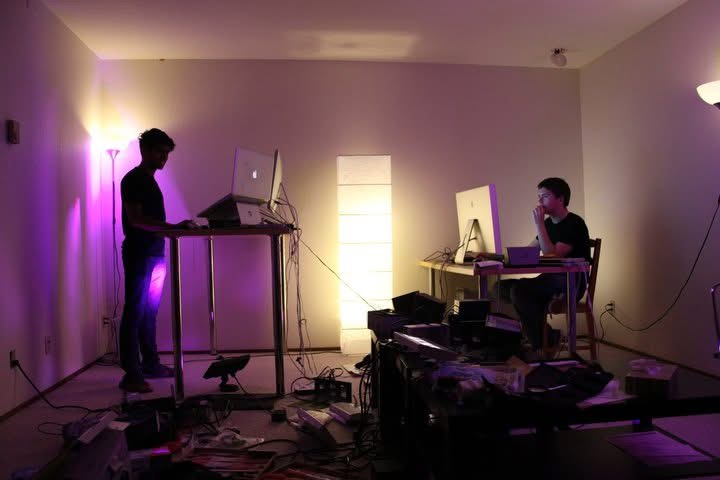
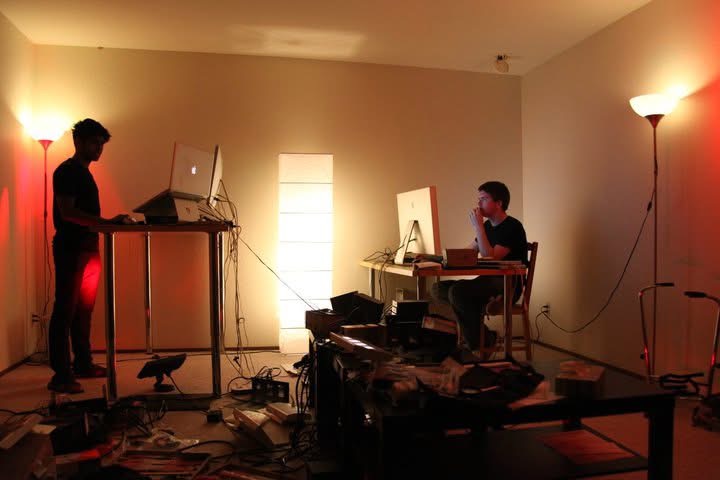
The apartment. Standing desks made of IKEA parts, cables everywhere.
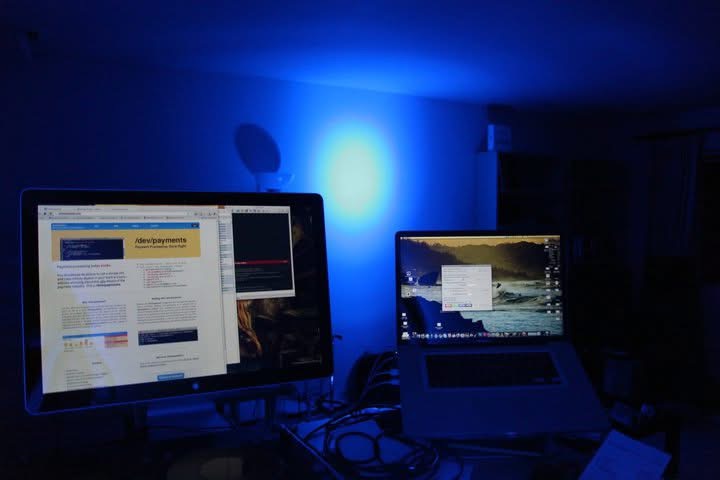
The /dev/payments website. "Payment processing for developers."
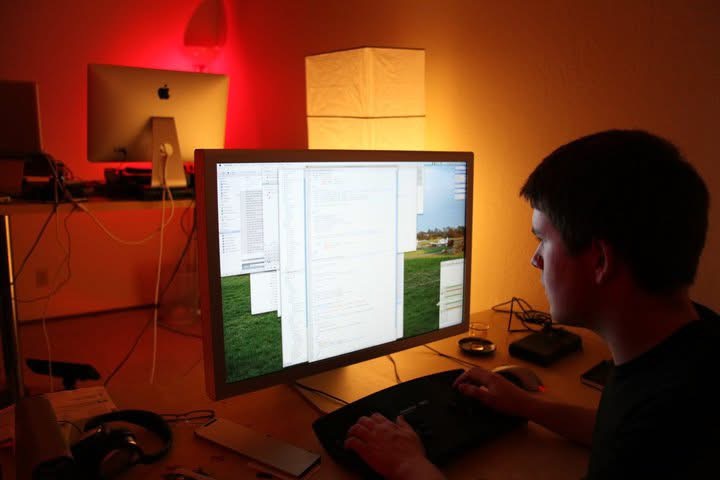
John at his desk.
The product idea was simple: accept money online in a few lines of code. The name took longer. We incorporated as SlashDevSlashFinance inc., later renamed to HGSC inc., and in 2010, at the Ramona Street office, Greg Brockman proposed Stripe during a team renaming session — after the magstripe on the back of a credit card.
Artifacts
- 2010 /dev/finance inc. — Original pitch document Original 2010 /dev/finance document for /dev/payments: finance for developers, by developers.
- 2010 Letter to MIT, on /DEV/FINANCE INC. letterhead September 8, 2010 letter from Raeez Lorgat to MIT Associate Dean Arnold Henderson — dropping out to commit full-time to /dev/finance / /dev/payments.
- 2011 HGSC, Inc. Restricted Stock Purchase Agreement HGSC, Inc. — a prior legal name of Stripe — issuing restricted stock to Raeez Lorgat. Signed by Patrick Collison as CEO. Financial terms redacted.
- 2022 Letter from Patrick Collison Patrick Collison, co-founder and CEO of Stripe, on Raeez Lorgat and the early venture that became Stripe.
- 2022 Letter from Hemant Taneja Hemant Taneja, General Catalyst, on Raeez Lorgat's role in founding Stripe.
The 2010 pitch document, the September 8, 2010 letter to MIT, and the 2011 stock purchase agreement are contemporaneous records. The 2022 letters from Patrick Collison and Hemant Taneja were submitted later in support of an O-1 visa petition.
The public memory of a company is always simpler than the company itself. Stripe's current materials identify Patrick and John Collison as the company's cofounders. This page records the earlier /dev/finance / /dev/payments period — the company that became Stripe, before that public memory stabilized.